
Have you ever walked up to a home or business and noticed a “No Soliciting” sign near the front door? If so, you may have wondered whether it applies to salespeople, political campaigners, charities, or even delivery drivers. The phrase is common, but its exact meaning isn’t always obvious.
If you’re searching for the no soliciting meaning, you’re in the right place. This guide explains what the term means, how No Soliciting signs are used, who they apply to, and why they matter. You’ll also learn the legal and practical differences between soliciting, trespassing, and ordinary visits.
What Does No Soliciting Mean?
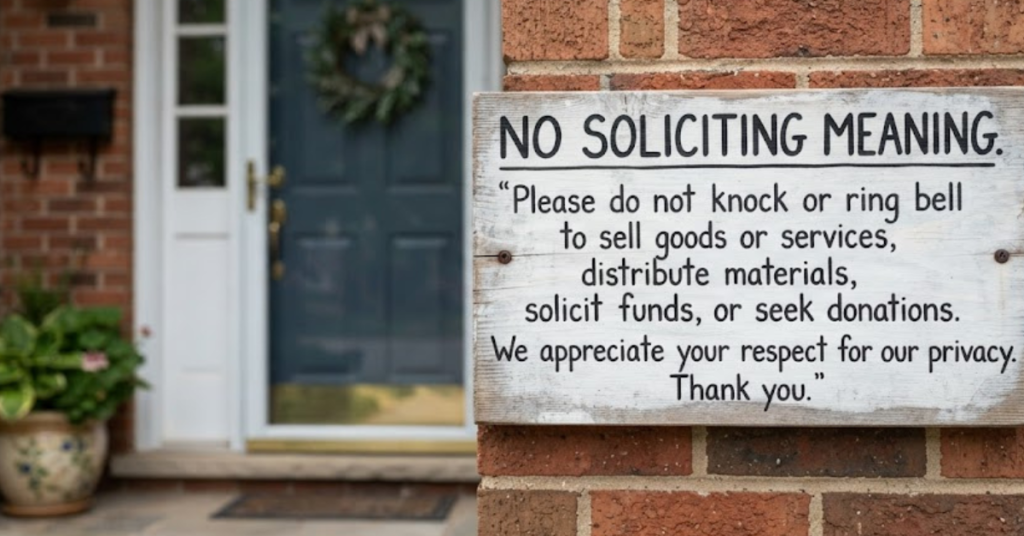
The simplest answer is that “No Soliciting” means the property owner does not want uninvited people approaching them to sell products, promote services, request donations, or make unsolicited offers.
When you see this sign, it generally asks visitors not to knock on the door for commercial or promotional purposes.
In everyday language, it means:
“Please don’t knock unless you have a legitimate reason for being here.”
The sign is intended to reduce unwanted interruptions and give homeowners or businesses greater privacy.
Soliciting Meaning Explained
To fully understand the soliciting meaning, it’s helpful to look at the word itself.
Soliciting generally means asking someone for something. Depending on the situation, it may involve:
- Selling products
- Offering services
- Requesting donations
- Seeking signatures
- Promoting a business
- Advertising subscriptions
- Asking for financial contributions
The word has different meanings in different contexts, but on residential property, it usually refers to door-to-door sales or promotional activities.
No Soliciting Signs Meaning
The no soliciting signs meaning is straightforward: the property owner requests that solicitors do not disturb them.
These signs are commonly displayed on:
- Front doors
- Gates
- Mailboxes
- Apartment entrances
- Office buildings
- Private businesses
Although designs vary, the message remains the same—unsolicited sales or promotional visits are not welcome.
Who Counts as a Solicitor?
Many people assume only salespeople are solicitors, but the category is often broader.
Examples include:
Door-to-Door Sales Representatives
People selling:
- Home security systems
- Internet services
- Roofing
- Solar panels
- Cleaning products
- Magazine subscriptions
Fundraisers
Individuals requesting donations for:
- Charities
- Nonprofit organizations
- Schools
- Community groups
Religious Outreach
Some religious organizations visit neighborhoods to share information or invite people to services.
Whether they are covered by a “No Soliciting” sign depends on local laws and individual circumstances.
Political Campaign Workers
Political canvassers may knock on doors to discuss elections or encourage voting.
In some places, they are treated differently under local regulations because political speech may receive additional legal protections.
Who Is Usually Not Considered a Solicitor?
Certain visitors generally aren’t included.
Examples include:
- Mail carriers
- Package delivery drivers
- Emergency responders
- Utility workers
- Invited guests
- Family members
- Friends
- Scheduled contractors
These individuals are performing expected or necessary services rather than making unsolicited requests.
Why Do People Put Up No Soliciting Signs?
There are several practical reasons.
Privacy
Many homeowners simply don’t want unexpected interruptions during the day.
Security
Reducing unnecessary visitors can improve personal safety and discourage scams.
Convenience
Frequent door-to-door sales visits can become frustrating, especially in busy neighborhoods.
Working From Home
Remote workers often prefer uninterrupted workdays without unexpected knocks.
Protecting Pets or Children
Some families want to avoid disturbing sleeping babies or pets that react to visitors.
Are No Soliciting Signs Legally Enforceable?
This is one of the most common questions.
The answer depends on:
- Local laws
- City ordinances
- State or provincial regulations
- Country-specific rules
In many areas, a No Soliciting sign clearly communicates the property owner’s wishes. Ignoring it may strengthen a trespassing claim if someone refuses to leave after being asked.
However, the legal effect of these signs varies by jurisdiction.
No Soliciting vs. No Trespassing
People often confuse these signs, but they have different purposes.
| No Soliciting | No Trespassing |
| Discourages unwanted sales or requests | Prohibits unauthorized entry onto property |
| Focuses on commercial or promotional visits | Covers nearly all unauthorized visitors |
| Allows invited guests | May restrict all unapproved entry |
| Primarily about interruptions | Primarily about property access |
A No Soliciting sign doesn’t necessarily ban every visitor, while a No Trespassing sign generally imposes broader restrictions.
Common Situations Where You’ll See No Soliciting Signs
These signs appear in many locations.
Residential Homes
The most common location.
Apartment Buildings
Often posted near entrances to reduce unwanted visitors.
Small Businesses
Owners may discourage salespeople during business hours.
Gated Communities
Neighborhood associations sometimes install community-wide signs.
Office Buildings
Reception areas often display signs to limit unsolicited business visits.
Common Misunderstandings About No Soliciting Signs
Several myths surround these notices.
Myth 1: It Means Nobody Can Knock
Not true.
Friends, deliveries, maintenance workers, and invited guests are generally still welcome.
Myth 2: It Only Applies to Salespeople
While sales representatives are the most common target, many signs are intended to discourage all unsolicited promotional visits.
Myth 3: It’s Illegal to Knock Anyway
Not necessarily.
Whether ignoring a sign violates the law depends on local regulations.
Myth 4: It Stops Every Type of Canvassing
Political campaigns and certain religious outreach activities may be treated differently under some legal systems.
Tips for Respecting No Soliciting Signs
Whether you’re representing a business or simply visiting neighborhoods, following good etiquette matters.
Read Signs Carefully
Different properties may display different requests.
Don’t Ignore Clear Instructions
Respecting homeowners’ wishes demonstrates professionalism.
Avoid Repeated Visits
If someone declines your offer, don’t continue returning.
Know Local Rules
Businesses conducting door-to-door marketing should understand local permit requirements.
Examples of Soliciting
Understanding real-life examples makes the concept easier.
Soliciting
- Selling pest control services
- Offering lawn care
- Asking for charitable donations
- Promoting internet packages
- Selling magazine subscriptions
Not Usually Soliciting
- Delivering a package
- Visiting a friend
- Repairing utilities
- Emergency medical response
- Scheduled home maintenance
Key Takeaways
- A No Soliciting sign asks uninvited salespeople and promoters not to approach the property.
- Soliciting generally means requesting business, donations, or promotional engagement.
- Delivery drivers and invited guests are typically not considered solicitors.
- Local laws determine how these signs are enforced.
- Respecting No Soliciting signs helps maintain privacy and positive community interactions.
Frequently Asked Questions
What does no soliciting mean?
It means the property owner does not want unsolicited visitors attempting to sell products, promote services, request donations, or make similar requests.
What is the soliciting meaning?
Soliciting generally refers to asking someone for business, money, support, or participation, often through direct contact such as door-to-door visits.
What do no soliciting signs mean?
These signs communicate that unsolicited salespeople, marketers, or fundraisers should not knock on the door or approach the property for promotional purposes.
Does a No Soliciting sign stop delivery drivers?
No. Delivery personnel, mail carriers, emergency responders, and invited guests are generally not considered solicitors.
Is ignoring a No Soliciting sign illegal?
It depends on local laws. While the sign clearly expresses the owner’s wishes, legal consequences vary depending on the jurisdiction.
What’s the difference between No Soliciting and No Trespassing?
A No Soliciting sign discourages unwanted sales or promotional visits, whereas a No Trespassing sign generally prohibits unauthorized entry onto private property.
Conclusion
Understanding the no soliciting meaning helps clear up a common source of confusion. These signs are designed to protect homeowners and businesses from unwanted commercial or promotional interruptions while allowing expected visitors such as friends, delivery drivers, and service professionals to continue their normal activities.
Whether you’re a homeowner looking to maintain your privacy or someone who works in door-to-door sales, recognizing what No Soliciting signs communicate is an important part of respectful interaction. As communities continue to value personal space and convenience, these simple signs remain an effective way to set clear expectations at the front door.